
 Türkçe
 Deutsch
Buerger’s disease, medically known as thromboangiitis obliterans, is a serious vascular disease that usually affects young men who smoke. It affects small and medium-sized arteries and veins, causing inflammation and congestion. Symptoms of Buerger’s disease include coldness, pain, numbness, bruising in the hands and feet, and a feeling of limping due to increased pain when walking. When the disease progresses, gangrene can lead to the loss of fingers. Treatment success is higher if Buerger’s disease is diagnosed in its early stages.
Buerger’s disease is common in the hand and foot. It can lead to severe circulatory disorders in the hand and foot. The diagnosis is made using the diagnostic criteria for Buerger’s disease and needs to be differentiated from other vascular diseases. The disease may be associated with a genetic predisposition. The disability rate for Buerger’s disease is determined by the extent of vascular damage. Buerger’s disease can be confused with Raynaud’s phenomenon, so accurate diagnosis is important.
Sympathectomy is the single most effective and permanent method for treating Buerger’s disease. Sympathectomy surgery relieves vasoconstriction and promotes healing by increasing blood flow. Therefore, surgery should be the first and only choice in the treatment of Buerger’s disease. The recovery period for Buerger’s disease varies from person to person, but patients experience a significant improvement in quality of life after sympathectomy. Buerger’s disease doctors, usually vascular surgeons, can stop the disease from progressing with early intervention.
| Other Names | Thromboangiitis Obliterans |
| Affected System | Circulatory System, especially the veins of the foot |
| Causes | Although not fully known, it is considered genetic, smoking is an increasing factor |
| Risk Factors | Smoking, young age (usually 20-45), male gender, genetic predisposition |
| Symptoms | Pain, coldness, discoloration of the feet and hands, loss of leg hair, pain when walking (claudication), wound opening and gangrene in the fingers |
| Diagnostic Methods | Physical examination, Doppler ultrasound and definitive diagnosis is made by angiography. |
| Complications | Bruising and gangrene of the fingers, infection and pain attacks that do not respond to painkillers |
| Treatment Methods | The only treatment is surgery (sympathectomy), painkillers and vasodilators are ineffective because they cannot reach the artery because of its congestion. Morphine-type drugs that only relieve pain from the brain. |
| Prevention | Smoking cessation, regular follow-up, attention to foot and hand hygiene |
| Frequency of Appearance | It occurs moderately frequently in smokers and less frequently in women. |
| Prognosis | Discontinuation of tobacco use may halt the progression of the disease, but the scarring and complications do not go away. Sympathectomy relieves pain and improves foot nutrition. |

Prof. Dr. Yavuz Beşoğul
>Turkey’s Cardiovascular Surgery Doctor
What is Buerger’s Disease and how does it affect the body?
We can liken the vascular network in our body to the pipelines that carry water to every street in a city. The healthier these lines are, the more vibrant every part of the city is. Buerger’s Disease is an insidious problem that targets the thinner of these pipelines, especially in our hands and feet.
It works in a completely different way from atherosclerosis, which most people know. In atherosclerosis, the arteries gradually narrow due to the build-up of cholesterol and fat in their walls. In Buerger’s Disease, however, the problem is not a build-up, but an inflammation of the vessel wall itself. This inflammatory reaction, triggered by chemicals in tobacco products, damages and inflames the inner surface of the blood vessel. In this sensitive and inflamed environment, blood begins to clot much more easily than usual. These tiny blood clots (thrombi) close the blood vessel like a clog and prevent the blood from flowing forward.
When the blood stops flowing, the tissues at the end of that vessel – usually our fingers and toes – are caught in a drought. They become unable to receive oxygen and nutrients. At this point, a painful and destructive process begins. Tissues first weaken, then become damaged and finally, if blood flow cannot be restored, lose their vitality.
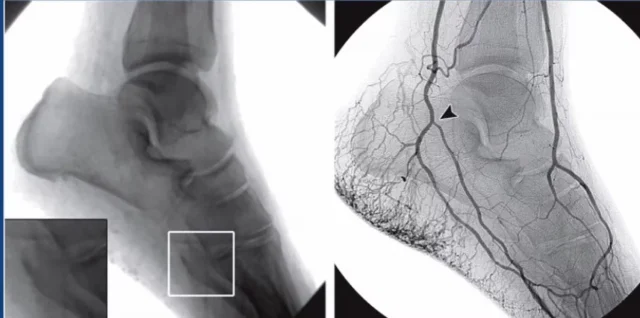
Another interesting aspect of this disease is its “regional” progression. That is, instead of a blood vessel being completely blocked throughout, certain parts of it become diseased, while there are sections of healthy blood vessels in between. This triggers a defense mechanism of the body. The body tries to create new pathways, i.e. collaterals, to bypass the obstructed path. These newly formed vessels are so thin and curved that they resemble a “corkscrew” when seen on an angiogram. This thyroid image is a very valuable diagnostic clue for Buerger’s Disease.
Who is more likely to have Buerger’s Disease?

Buerger’s Disease usually behaves selectively and targets a specific profile. The disease is most common in young and middle-aged men under 45-50 years of age. Individuals who smoke more than one pack of cigarettes a day or who have smoked tobacco for many years are at greatest risk. The age of first onset of symptoms is usually in the 30s. It is very rare in women and older people.
However, this picture has started to change in recent years. Unfortunately, with the increase in smoking among women, the number of female Buerger’s patients is also increasing. This makes it painfully clear that the main determinant of the development of the disease is not gender, but tobacco use.
The geographical distribution of the disease is also quite striking. Although it can occur anywhere in the world, it is much more common in the Mediterranean basin, Middle East and Far East countries (such as Japan, Korea, India). In Western Europe and North America, the incidence is much lower. These geographical differences suggest that, in addition to smoking habits, a genetic predisposition may play a role in the onset of the disease. Everyone’s genetic heritage is different, and some genetic make-ups may make a person more vulnerable to the destructive effect of tobacco on blood vessels.
What are the causes of Buerger’s Disease and what is the most important risk factor?
[embedyt] https://www.youtube.com/watch?v=wluFL3R38zQ[/embedyt]There is no single, definitive answer to why Buerger’s Disease begins. But in the midst of all the uncertainties, there is one fact that the scientific community agrees on and has repeatedly underlined: Tumor. The absolute number one culprit in the emergence and progression of Buerger’s Disease is tobacco and all tobacco-containing products.
The main factors thought to play a role in the development of this disease are:
- Cigarette
- Puro
- Pipe
- Hookah
- Rolled or chewed tobacco
- Cannabis
The question of why, when millions of people use tobacco, only a select group develops the disease raises other potential factors. Some conditions on top of tobacco use may predispose to the onset of the disease. These additional factors are:
- Genetic predisposition
- Abnormal response of the immune system
- Chronic gum diseases
We can think of this table as a formula: Heavy tobacco use Individual predisposition (genetic or immunological) = Buerger’s Disease. So tobacco is the spark that lights the fuse, but how full the powder keg is depends on the individual’s own biological makeup. Avoiding tobacco therefore means eliminating the most important variable in this dangerous equation.
What are the symptoms of Buerger’s Disease and what symptoms does it cause?
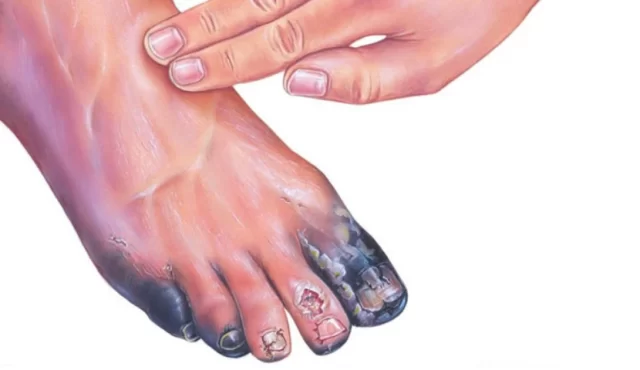
Buerger’s Disease usually makes its presence felt gradually. Symptoms may be mild and vague at first, but over time they become more severe and seriously impair quality of life. Separating the symptoms of early and advanced stages of the disease will make the situation more understandable.
Early symptoms that appear in the early stages of the disease and should be recognized as alarm bells include the following:
- Numbness of fingers and toes
- Pins and needles or tingling sensation
- Whitening, bruising and subsequent reddening of the fingers when exposed to cold or stress (Raynaud’s phenomenon)
- Pain, especially in the sole or arch of the foot, that starts with walking and goes away with rest
- The appearance of a red, hard and painful vascular strip on the legs or arms, close to the surface of the skin
These first symptoms can often be dismissed with thoughts such as “it’s fatigue” or “I’ve smoked”. However, if these complaints occur, especially in a young smoker, they should be taken as a call for vascular help and a specialist should be consulted.
If the disease is left untreated and the person continues to smoke, the picture becomes much more severe. Symptoms in the later stages indicate the onset of tissue damage:
- Rest pain
- Self-opening, very painful and unhealing sores (ulcers) on the tips of the fingers or nail edges
- Blackening, loss of sensation and tissue death in the fingers (gangrene)
Rest pain is the most important symptom indicating the severity of the disease. This means that the tissues no longer receive enough blood even at rest. The pain is so severe that it often wakes the person from sleep at night and has a burning, throbbing character. Gangrene is a point of no return. The blackened, disfigured finger seen in Buerger’s disease illustrations is gangrene itself. At this stage, the aim is no longer to save the tissue, but to prevent the spread of infection and a greater loss of limb.
How is Buerger’s Disease diagnosed?
Diagnosing Buerger’s Disease is like a detective piecing together clues. Because there is no single blood test or film that shows this disease for sure. The correct diagnosis can only be reached by carefully ruling out all other diseases that can cause similar symptoms. Buerger is therefore considered a “diagnosis of exclusion” and the experience of a Cardiovascular Surgeon is vital in this process.
The steps on the path to diagnosis are usually as follows:
- Listening to the patient’s story in detail
- Perform a thorough physical examination
- Blood tests to rule out other diseases
- Doppler ultrasound, which measures blood flow in vessels
- Angiography that maps the vessels
Among these steps, angiography is the most valuable method for confirming the diagnosis. These films, which are taken by injecting a special dye into the vessels, clearly show the thin “corkscrew”-like side vessels characteristic of Buerger’s disease, the congestion in the main vessels and the spread of the disease. When all these findings are combined with the patient’s age, smoking history and complaints, the diagnosis is confirmed.
How is Buerger’s Disease treated and why is quitting smoking so important?
This heading contains perhaps the most important message about Buerger’s Disease. If you suffer from this disease or are at risk, please read this section very carefully. There are various medications, supportive methods and even surgery that have been developed to treat Buerger’s disease. But none of these can replace the single most important step that forms the basis of treatment: To completely and definitively eliminate tobacco and all products containing nicotine from your life.
This is not a recommendation but a treatment. It is one of the scientifically proven methods to stop the progression of the disease, relieve pain and, most importantly, prevent the loss of a limb called amputation. Quitting smoking is as important a medical intervention for a Buerger’s patient as, if not more important than, taking medication.
Why is it so important? Because the chemicals in tobacco are like fuel that constantly ignites the inflammation in your arteries. As long as you keep smoking, the fire in your arteries will not go away. The medicines and the dressings only seem to suppress this fire for a moment, but underneath, the burning continues. Studies show that smoking just one cigarette a day is enough to keep the disease active. Therefore, approaches such as “cutting down” or “switching to lighter cigarettes” are certainly not a solution. Even nicotine patches and gum are generally not recommended, as they can have a negative effect on the blood vessels due to the nicotine they contain. The solution is a complete and permanent farewell.
We realize that this farewell process can be challenging. But you are not alone on this path. Smoking cessation clinics, specialized doctors and psychologists are ready to offer you the support you need during this process. This is the bravest and truest action you can take, not just to break a habit, but to save your limbs and your future.
Apart from smoking cessation, what medications and supportive therapies are used for Buerger’s Disease?
Although quitting smoking is the mainstay of treatment, a range of additional therapies are used to manage existing symptoms and improve the patient’s quality of life. Although these treatments do not stop the fire, they help to contain the flames and limit the damage.
Buerger’s disease medicines are usually aimed at improving blood flow and relieving symptoms:
- Vasodilating drugs
- Drugs that prevent clot formation by diluting the blood (such as Aspirin)
- Prostaglandins, which are administered intravenously and have a strong vasodilating effect, especially in severe cases
- Various painkillers to control severe pain
- Appropriate antibiotics if infection develops in the wounds.
If arterial nutrition is completely disrupted, it is impossible for these drugs to work and the pain to stop. Therefore, if there is a wound and infection in the foot, pain and infection persist because there is no arterial flow and the drugs cannot reach the tissue
 On the other hand, there are some important points that the patient should pay attention to in their daily life and support the treatment:
- Professional care and dressing of wounds
- Careful protection of hands and feet from cold
- Avoiding blows and injuries to the limbs
- Wearing comfortable and wide shoes that do not obstruct blood circulation
Each of these supportive therapies makes sense when combined with smoking cessation and helps the patient lead a more comfortable life.
What surgical interventions may be required in advanced cases of Buerger’s Disease?
If Buerger’s Disease is diagnosed early or late, the only surgical treatment is a sympathectomy. For the feet, a lumbar sympathectomy is performed and the sympathetic nerves that cause involuntary contraction of the vessels are cut, providing some relaxation of the vessels and increased blood flow. It is especially useful in reducing pain. In the long term, improvement is seen due to increased capillary flow.
In Burger’s disease, the vein should never be entered. Because it causes thrombosis of the formed side capillaries and increases the level of amputation, exacerbating the pain and accelerating necrosis and gangrene.
Bypass surgery is rarely an option in Buerger’s disease. Because it is often not possible to find a healthy target vessel to bypass, i.e. a healthy target vessel into which the blood is diverted.
Unfortunately, in patients who have had a late and untimely sympathectomy, and if the vessel wall and capillaries have been destroyed in order to open the vessel with an interventional wire, gangrene progresses rapidly, the infection cannot be controlled and the pain intensifies. In this case, the amputation may become inevitable. Amputation is a mandatory procedure to remove dead tissue and prevent the infection from spreading throughout the body and threatening the patient’s life. It should be remembered that any surgical intervention in a patient who continues to smoke is doomed to fail and may lead the patient to a worse end, namely an amputation at a higher level.
| But | Surgery to remove the influence of the sympathetic nerves in order to stimulate vasodilation to reduce pain and increase circulation in Buerger’s disease.SEMPATECTOMY. |
| Indications | – Severe rest pain
– Wounds, ulcers and gangrene of the fingers |
| Application Zone | – Usually lumbar sympathectomy (in patients with lower extremity involvement)
– Sometimes thoracic sympathectomy (if upper limb involvement is present) |
| Surgical Methods | – Minimally invasive lumbar sympathectomy |
| Type of Anesthesia | General |
| Impacts | – Dilation of blood vessels (vasodilation)
– Increase in skin temperature – Disappearance of severe ischemic pain |
| Complications | – No complications in experienced hands. |
| Efficacy Status | It relieves symptoms at a rate of -95% |
| Alternative Approaches | – Medical treatment (iloprost, antiplatelets) is given out of desperation but is of no use. This is because the vascular lumen is occluded by the soft socket and the medicine cannot reach it.
– Amputation (in advanced stage)-Loss of limb is not considered an alternative as it is an unpredictable condition. |
Are there any experimental or new treatment prospects for Buerger’s Disease?
Yes, the medical world is constantly working on new treatments that may offer hope for challenging conditions like Buerger’s Disease. Although they have not yet become standard treatment, there are some experimental methods that have the potential to make a significant difference in the future.
Root cell treatment
Therapeutic angiogenesis (treatments that stimulate new vessel formation)
In stem cell therapy, cells taken from the patient’s own bone marrow or fat tissue are injected into the limb with impaired blood supply. These cells are thought to trigger the formation of new, healthy blood vessels in the area. Unfortunately, these procedures do not help and may delay sympathectomy surgery and cause the patient to lose a limb. Initial results are quite disappointing. At the moment, these treatments are mostly used in large research hospitals and on patients who meet certain criteria. But they are certain to play an important role in the future of Buerger treatment.
Is Buerger’s Disease fatal and what is the course of the disease?
This is one of the biggest questions patients and their relatives have: Is Buerger’s disease fatal? The answer to this question is, with great relief, usually “no”. Buerger’s Disease is not a disease that leads directly to death, except in very rare cases of visceral involvement. However, even if the disease itself does not kill, the consequences (uncontrolled pain, wounds that do not heal, loss of limbs) can turn a person’s life into a nightmare. So even if the disease is not fatal, it can be extremely disruptive to quality of life.
The long-term course of the disease and the cure of Buerger’s disease depends entirely on the path the patient chooses. You have two options in this regard, there is no third way.
Pathway One: The patient breaks all ties with cigarettes on the day he or she learns of the diagnosis. From the moment he or she makes this decision, the progression of the disease is largely halted. The inflammatory process in the vessels subsides. Over time, the pain subsides, wounds have a chance to heal and, most importantly, the risk of amputation is minimized. Although the disease is not completely eradicated from the body, it turns into a dormant, controlled disease.
Second Way: The patient continues to smoke despite all warnings. In this case, the disease remains active and aggressive. Each cigarette is like a log thrown into the fire in the blood vessels. The pain intensifies, new and deeper wounds are opened, existing wounds rapidly progress to gangrene. And the end of this path, unfortunately, is usually recurrent and increasingly proximal (higher) amputations.
After Buerger’s Disease Surgery (Sympathectomy)
| The Progression of Renewal | Average 7-10 days |
| Purpose of Treatment | Increasing finger and limb circulation, reducing pain, preventing amputation. |
| Physical Activity | Early mobilization is recommended; circulation-enhancing walks are beneficial. |
| Drug Use | Painkillers, vasodilators and, if necessary, antiplatelet therapy may be used. |
| Wound Care | Surgical incision sites should be kept clean; signs of infection should be carefully monitored. |
| Complications | Rare ;Compensatory sweating, nerve damage, ineffective outcome, Horner’s syndrome (in thoracic applications). |
| Circulatory Monitoring | An increase in temperature and a decrease in pain in the fingers is expected; symptoms may recur in patients who have had the vein intervened intervention. |
| Nutrition | A balanced diet that supports circulation is recommended; there are no special restrictions. |
| Smoking and Alcohol | Smoking should be stopped; sympathetic block is ineffective if continued. |
| Sexual Activity | If the physical condition is suitable, it can usually be started within 1-2 weeks. |
| Psychological Support | Psychological support is recommended due to chronic pain, risk of limb loss and lifestyle changes. |
| Tool Use | If reflexes and mobility are adequate, it can usually be started within 1 week. |
| Controls | Vascular surgery and neurology follow-up is recommended in the first month and thereafter according to symptoms. |
Frequently Asked Questions
Is Buerger's disease fatal?
No, Buerger’s disease is not directly fatal. However, it can lead to sores on the fingers, hands and feet due to vascular occlusion, and in advanced cases gangrene. If smoking continues and gangrene develops, serious infections (sepsis) can be life-threatening. The main risk lies in the complications caused by the disease. Quitting smoking largely eliminates this risk.
Is it possible to get rid of Buerger's disease?
Yes! First of all, quitting smoking completely is the most important way to stop the progression of the disease. Sympathectomy surgery can also reduce symptoms and stop the disease, especially when performed early. Early intervention can improve quality of life.
Does Buerger's go away when you stop smoking?
When you stop smoking, the disease stops progressing. Although existing vascular damage is permanent, new wounds do not form and pain is reduced. A life without smoking puts the disease to sleep and virtually eliminates the risk of amputation (loss of a limb). Continuing to smoke significantly increases the risks.
Is Buerger's disease gangrene?
No, Buerger’s disease does not directly cause gangrene, but it can lead to gangrene. As a result of blood vessel blockage, tissues do not receive enough blood and oxygen, which can result in tissue death (gangrene) of the fingers or feet. If left untreated and continued smoking, the worst outcome can be gangrene and loss of limbs.
At what age does Buerger's disease occur?
It usually occurs in young and middle-aged men between 20 and 45 years of age. It is rarer in women. Buerger’s disease should be suspected, especially in heavy smokers and if there are signs of circulatory disorders in the hands and feet.
Is Buerger's disease leg amputated?
There is a risk of limb loss (amputation) in Buerger’s disease, but this occurs in people who do not quit smoking and whose disease is advanced. In patients who quit smoking completely, this risk is almost zero. Amputation only becomes mandatory if irreversible gangrene develops. The decision is entirely in your hands!
How is the Buerger test performed?
There is no single specific test for Buerger’s disease. The diagnosis is based on history, physical examination, angiography and blood tests. Angiography provides a clear picture of vascular occlusion. Blood tests are also done to rule out similar diseases.
Which department treats Buerger's disease?
Cardiovascular Surgery is responsible for the diagnosis, treatment and follow-up of Buerger’s disease. This is the department to turn to if you suffer from poor circulation, unhealing wounds or pain in the hands or feet. Rheumatology may also be consulted if necessary, but cardiovascular surgeons are the main follow-up specialists.
Blog Yazıları

What Is Thickening of the Heart Muscle (Myocardial Hypertrophy)?
Prof. Dr. Yavuz Beşoğul » Cardiovascular disease » What Is Thickening of the Heart Muscle [...]
Apr

Endocardium (inner lining of the heart)
Prof. Dr. Yavuz Beşoğul » Cardiovascular disease » Endocardium (inner lining of the heart)The endocardium, [...]
Apr
Heart Disease: Types, Causes, and Symptoms
Prof. Dr. Yavuz Beşoğul » General » Heart Disease: Types, Causes, and SymptomsHeart diseases are [...]
Aug
How the Heart Works
Prof. Dr. Yavuz Beşoğul » General » How the Heart WorksThe heart functions as a [...]
Aug

How Many Hours Does Heart Valve Surgery Take?
Prof. Dr. Yavuz Beşoğul » General » How Many Hours Does Heart Valve Surgery Take?Heart [...]
Aug
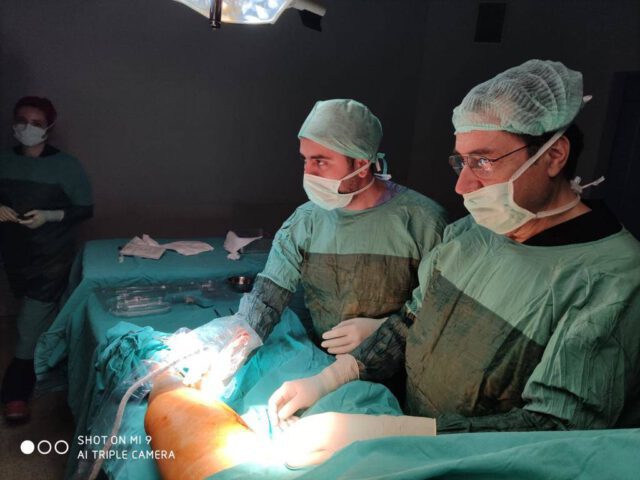
How long does coronary artery bypass (CABG) surgery take?
Prof. Dr. Yavuz Beşoğul » Coronary Artery Bypass » How long does coronary artery bypass [...]
Aug
Kalp Kapak Değişimi Ameliyatı Nedir? Kalp Kapak Değişimi Nasıl Yapılır?
Prof. Dr. Yavuz Beşoğul » Kalp Kapak Hastalıkları » Kalp Kapak Değişimi Ameliyatı Nedir? Kalp [...]
Aug
Kalp Kapakçığı Tamiri ve Kalp Kapakçığı Değişimi Arasındaki Fark
Prof. Dr. Yavuz Beşoğul » General » Kalp Kapakçığı Tamiri ve Kalp Kapakçığı Değişimi Arasındaki [...]
Aug