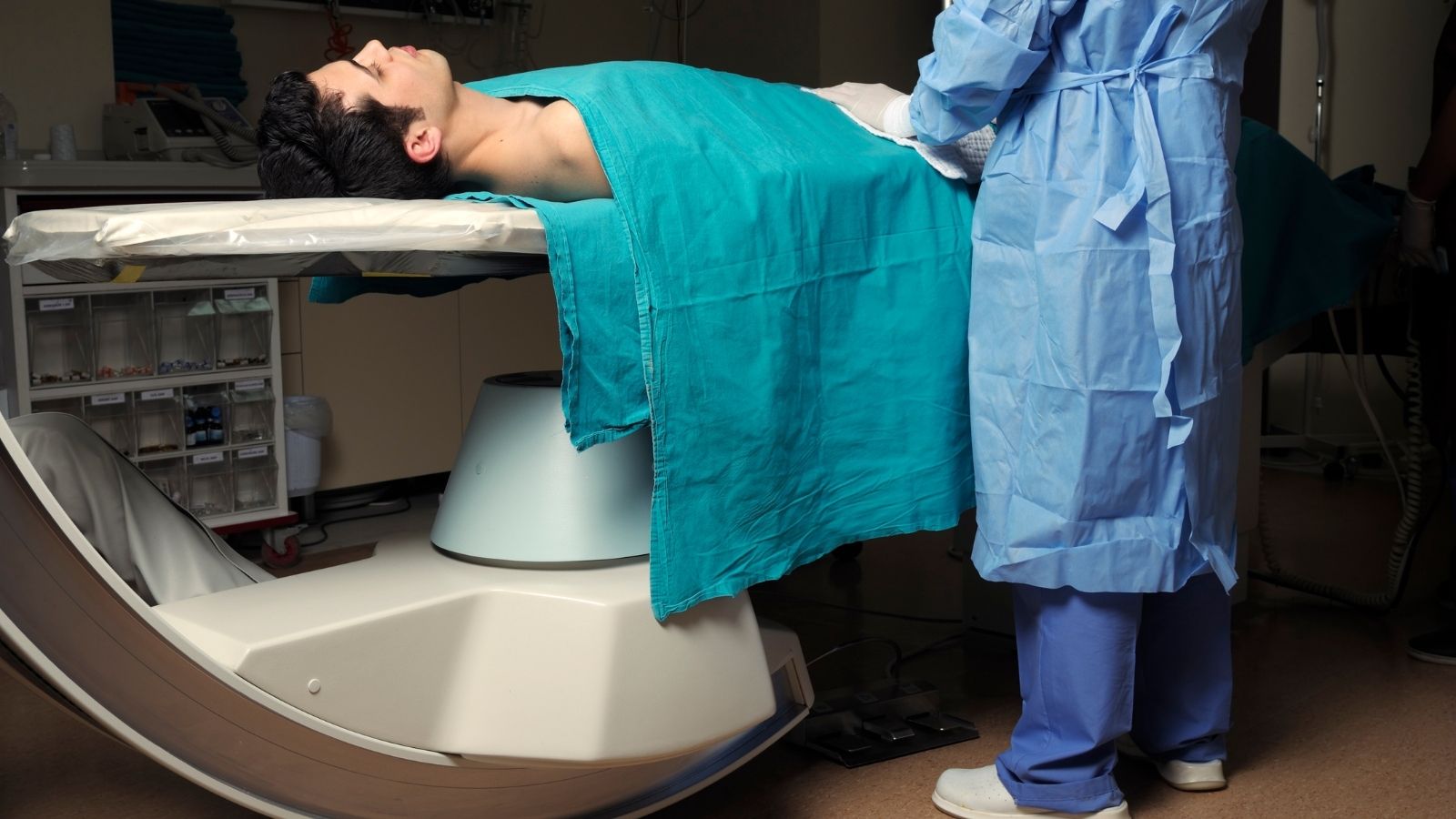


A chest X-ray is a radiological imaging method used to evaluate lung and heart structures. It provides essential information on respiratory diseases, cardiac enlargement, and thoracic pathologies. The procedure is quick, non-invasive, and often serves as a first-line diagnostic tool.
Chest X-ray indications include chronic cough, chest pain, and suspected pneumonia. Physicians also use it to monitor known lung conditions, such as tuberculosis, or to assess post-surgical recovery in thoracic operations. Its diagnostic role makes it a cornerstone in pulmonary evaluation.
The procedure of chest X-ray involves exposure to low-dose ionizing radiation. Patients are usually asked to stand upright, inhale deeply, and hold their breath during imaging. This ensures optimal visualization of lung fields and mediastinal structures, minimizing motion artifacts.
Modern chest radiography benefits from digital technology, which enhances image quality and reduces radiation dose. Advanced systems allow quick image transfer, easy storage, and detailed comparison of prior examinations, enabling accurate follow-up in clinical practice.
| Medical Name | Chest X-ray (Lung X-ray, PA Chest X-ray) |
| Frequent Use Areas | – Lung infections (pneumonia, bronchitis)- Lung tumors- Heart enlargement- Pleural fluid- Evaluation after fracture and trauma |
| Causes | – Respiratory complaints (cough, shortness of breath, chest pain)- Fever, sputum, trauma- Diagnosis and follow-up |
| Risk Factors | – Pregnancy (due to radiation)- Frequent repeated shots |
| Complications | – Radiation exposure (very low level)- Incorrect assessment due to incorrect positioning |
| Diagnostic Methods | – Clinical examination – Comparison with other imaging modalities |
| Treatment Methods | – Chest radiography is a diagnostic method, not used for treatment |
| Prevention Methods | – Avoiding repetitive shots unless necessary – Taking shots in pregnant women with the approval of a doctor |
What is a Chest X-ray and How is the Image Formed?
A chest X-ray is a process of transferring a kind of shadow play of the body onto a film using a special type of radiation called X-rays. As the X-ray beam passes through the body, it is absorbed at different rates depending on the density of the tissues it encounters. Just as sunlight can easily pass through a glass window but not through a wall, X-rays pass through some tissues and get stuck in others. It is the difference in these “pass through” and “hang up” rates that creates the famous black, white and grayscale image we see on X-rays.
The colors of the different structures on the image are formed as follows:
Dense Structures: Very dense structures such as bones, calcium deposits or metal implants used during surgery almost completely block X-rays. They therefore appear bright white on the film. Sternum wires, prosthetic valve rings or vessel clips used in heart surgery can be clearly distinguished.
Medium Intensity Structures: Structures such as the heart, large vessels, muscle tissue and the diaphragm absorb some X-rays and transmit others. These tissues appear in various shades of gray on the film. For example, in cases of fluid accumulation between the membranes of the lungs (pleural effusion) or pulmonary edema, these fluids can form a gray opacity and cover the normal tissue underneath.
Low Density Structures: Because the lungs are filled with air, their density is very low. Therefore, they hardly absorb X-rays at all and allow them to pass through easily. This is why healthy lung tissue appears black or dark on the film.
The clarity and diagnostic value of this image is directly dependent on some technical factors set by the radiology technologist. Chest X-rays usually use a technique called “high kVp”. This is because the high-energy beams better penetrate the dense mid-chest region (mediastinum), where the heart and major vessels are located, making structures such as the spine or aorta behind it visible. Being able to see these details is vital for cardiovascular surgery. Although chest radiography contains ionizing radiation, it is worth noting that the dose received with modern devices is equivalent to a few days of radiation we receive from nature in daily life and is quite low.
How is a chest radiograph taken and why are different radiographs needed?
For a complete and accurate assessment of the chest area, it is usually essential to shoot from at least two different angles. This is similar to photographing both the front and the side of a building. A single angle does not give us enough information about three-dimensional structures. Which shots are taken depends on the general condition of the patient and what we are investigating.
How is PA chest radiography performed and why is it the gold standard?
The PA (Posteroanterior) chest radiograph is considered the “gold standard” all over the world as it provides the most anatomically correct and least distorted view of the heart, main vessels and lungs. The patient must be able to stand and follow some simple commands for this procedure to be performed.
During the scan, the patient rests his or her chest firmly against a panel called a “detector” where the X-ray film is placed. The beam-producing part of the X-ray machine is positioned behind the patient, usually at a distance of 1.80 meters. The rays reach the film by moving from the back to the front. The choice of this position is no coincidence. Since the heart is an organ located in the front part of our rib cage, it is closest to the film in this position. The closer an object is to the film, the more lifelike its shadow is. This prevents the heart from appearing larger than it actually is on the film (magnification).
Some simple movements requested from the patient during the acquisition are also critical for image quality. The patient is asked to roll their shoulders forward or “hug” the device. This movement frees the shoulder blades (scapula) from casting shadows over the lungs and prevents them from being mistakenly interpreted as a lung spot. Lifting the chin upward moves the apexes of the lungs away from these apexes, and pressing the shoulders down moves the collarbones away from these apexes. Finally, the patient is asked to take a deep breath and hold it. Usually a second deep breath allows the lungs to fill with air to the maximum, sharpening the borders of the heart and diaphragm and bringing the overall image quality closer to perfection.
Why is Lateral Radiography Necessary?
A lateral radiograph is an indispensable part that complements the anterior PA radiograph and adds a third dimension to it. It allows us to understand where in the chest (front, back or center) an abnormality seen on the PA radiograph is located. It is especially invaluable for illuminating some “blind spots”.
Areas where a lateral radiograph is particularly valuable are:
- The space just behind the breastbone (retrosternal space)
- The area directly behind the heart (retrocardiac space)
- Back and bottom corners of the diaphragm
- The part of the spine in the thoracic region
In addition, a lateral radiograph is much more sensitive than a frontal radiograph in detecting small amounts of fluid that accumulate between the lung membranes (pleural effusion) because fluid first begins to accumulate in these posterior corners by gravity. The standard exposure is the left lateral position with the patient leaning their left side against the detector. This is again because the heart is closer to the left side of the body and magnification is minimized in this position.
Which Special Exposures Are Used in Suspected Problematic Lung Films?
In some special cases, additional images may be needed to illuminate specific questions that standard footage cannot answer.
These special shooting methods are:
Lateral Decubitus Taken with the patient lying on their side. It is ideal for distinguishing whether an opacity in the lung is a free-moving fluid (effusion) or a fixed mass of lung tissue.
Lordotic (Apical) Radiography: Specifically designed to visualize the apexes (apkes) of the lungs. In standard photography, this area is often overshadowed by the collarbones. It is critical in the evaluation of tumors located at the top of the lung (Pancoast tumor), which can compress major vessels or nerves.
Oblique Radiographs: The patient is rotated approximately 45 degrees to the right or left. These angled shots help to better localize lesions or examine rib fractures by separating overlapping anatomical structures.
Why is a supine chest radiograph (AP radiograph) interpreted differently?
Anteroposterior (AP) chest X-ray is the only option for people who are too ill to stand or who are in intensive care. This is done at the patient’s bedside using portable X-ray equipment. Although AP radiography provides life-saving information, it contains some important geometric differences and illusions that must be kept in mind when interpreting it:
The main and most important difference on an AP radiograph is that the heart shadow appears larger than it actually is (magnification). This is because the acquisition mechanics are the opposite of the PA radiograph. In an AP scan, the film is placed under the patient’s back and the X-ray is delivered from the front. In this case, the heart is further away from the film. Think of how the shadow of your hand on the wall is magnified when you move it closer to a light source; the same principle applies here. The distance of the heart from the film and the shorter shooting distance causes the heart shadow to appear -20% larger than normal.
This has a very important diagnostic implication: An enlarged heart (cardiomegaly) cannot be reliably diagnosed on the basis of an AP radiograph alone. A heart that appears large on the film can only be a result of the filming technique. However, the following rule also applies: If the heart appears normal size on an AP movie, we can be sure that it is not really big, because the magnification effect could only make it look bigger.
The AP and especially the supine position has other misleading appearances. When lying on the back, gravity can cause the main vessels to spread, making the middle part of the chest (mediastinum) appear wider than normal. This can be mistaken for a mass or bleeding. Similarly, the diversion of pulmonary blood flow to the upper regions may mimic “cephalization”, a sign of heart failure. In addition, the shoulder blades often overlap the lung fields on the AP scan, preventing a clear assessment of the outer parts of the lungs.
Why and How Often Is A Chest X-Ray Taken After Heart Surgery?
In the early postoperative period, especially in the intensive care unit, chest radiography is one of the most basic and important pillars of patient follow-up. In fact, the first postoperative film is not a “routine” procedure, but a highly efficient examination to establish a new postoperative baseline and early detection of sudden and life-threatening complications that may develop due to the procedure.
When interpreting a postoperative film, it is very important to check everything in a systematic way so as not to miss critical findings. A checklist known as “ABCDE” is often used:
A (Airways): The position of the windpipe (trachea) and the location of the intubation tube are checked.
B (Breathing): Look for signs of lung ventilation, possible deflation (pneumothorax) or fluid accumulation (pleural effusion).
C (Circulation): The change of the heart shadow and mediastinal width compared to the previous film and the position of the inserted intravenous catheters are evaluated.
D (Diaphragm): The level and shape of the diaphragm are examined.
E (Everything Else): The status and position of all foreign bodies such as sternum wires, surgical clips, chest drains, pacemakers are reviewed.
The surgeon needs to be able to recognize both common and expected postoperative changes and complications that require immediate intervention.
Common situations that need to be monitored are the following:
Atelectasis Deflation of part of the lung. It is the most common finding after cardiac surgery and usually improves with physiotherapy.
Pleural effusion Accumulation of fluid between the membranes of the lungs. Small amounts may be considered normal, but a rapidly increasing or unilateral accumulation of fluid raises suspicion of bleeding (hemothorax).
Pneumothorax Deflation of the lung. A small and stable deflation can usually be followed, but a large or tension pneumothorax, which presses on the heart, requires emergency intervention.
Mediastinal hemorrhage It is a surgical emergency. The most important radiographic finding is the progressive enlargement of the mediastinal shadow on serial films.
Sternal Infection and Separation: It may present with symptoms such as broken or dislocated sternal wires or accumulation of air or fluid behind the sternum.
What is the Reason for a Chest X-Ray Before Heart Surgery?
In patients who have no complaints and are undergoing a simple non-cardiopulmonary surgery, a routine chest X-ray is usually not considered necessary. However, the situation is completely different for a patient who will lie on the operating table for cardiovascular surgery. In this patient group, preoperative radiography is not a luxury but a vital necessity. This film is both a road map of the surgical field for the surgeon and a baseline record of the patient’s current heart-lung status.
The main conditions that make preoperative chest radiography mandatory are as follows:
- The patient has active complaints such as chest pain, shortness of breath, persistent cough or signs of heart failure.
- The patient has a known heart or lung disease (COPD, congestive heart failure, etc.).
- The planned surgery involves the heart, lungs or other large vessels in the chest. This provides a basis for comparing the postoperative period.
- Advanced age of the patient.
This preoperative film can sometimes reveal unexpected findings that can completely change the surgical plan or cause the surgery to be postponed. For example, an unexpectedly large heart detected on the film, signs of active heart failure (pulmonary edema, pleural effusion) or previously undiagnosed serious lung disease can significantly increase the risk of surgery and may require treatment of these problems first.
What Does a Pacemaker or Shock Device (ICD) Look Like on a Chest X-ray?
After a pacemaker or shock device (ICD) has been implanted, a chest X-ray is performed as standard to verify that the electrodes (wires) of these devices to the heart have been placed in the right place and to check whether any unwanted complications (e.g. pneumothorax) have developed during the procedure.
The simplest way to distinguish between these two devices on a radiograph is to look at the appearance of the wires (electrodes) leading to the heart.
Pacemakers: Their electrodes appear as thin, smooth wires of the same thickness throughout. There is no obvious thickening on them.
ICDs (Shock Devices): The most distinctive feature of these devices is the presence of at least one thick, shiny, coiled section on the cable leading to the right ventricle. these thick coils, called “shock coils”, give the device the ability to deliver high-energy shocks to the heart in the event of dangerous rhythm disturbances. Pacemaker cables do not have these windings at all.
On the radiograph, we check not only the type of device but also whether the cables are located in the correct chambers. For example, the end of the cable leading to the right atrium (atrium) is directed forward and upwards in a characteristic “J” shape on the lateral film, while the end of the cable leading to the right ventricle is directed forward and downwards on the lateral film. If the patient has a special three-wire pacemaker (CRT) used for heart failure, we see the third wire going backwards in the side film, indicating that it stimulates the left side of the heart.
Does Chest X-Ray Give Information About Main Vascular Diseases (Aortic Aneurysm, Dissection)?
In acute and life-threatening conditions such as aortic rupture (dissection), chest radiography functions more as a preliminary warning and quick referral tool than as a definitive diagnosis. Its purpose is either to find another obvious cause that can explain the patient’s complaints (e.g. pneumonia, collapsed lung) or to strengthen the suspicion of an aortic catastrophe and direct the patient to a definitive diagnostic CT scan without wasting time. In a patient with a high clinical suspicion of aortic dissection, a normal chest radiograph never eliminates this suspicion.
However, some radiographic findings can seriously increase suspicion:
Thoracic Aortic Aneurysm (TAA): The most common finding is an enlargement of the shadow in the middle of the chest (mediastinum) or an outward ballooning (bulging) of the aortic artery in its normal course.
Aortic Dissection: There are some clues that can be seen on the radiograph for this condition:
Findings suspicious for dissection may include the following:
- Significant enlargement of the mediastinal shadow.
- The calcium line in the aortic wall is displaced inward from the outer edge of the aortic shadow (“calcium sign”). This gap indicates blood leaking between the layers of the vessel wall.
- Sudden accumulation of fluid between the lung membranes, especially on the left side (pleural effusion). This can be a sign of leakage or rupture.
- The appearance of an “apical hat” at the top of the lung. This is caused by blood pooling over the top of the lung.

Prof. Dr. Yavuz Beşoğul graduated from Erciyes University Faculty of Medicine in 1989 and completed his specialization in Cardiovascular Surgery in 1996. Between 1997 and 2012, he served at Eskişehir Osmangazi University Faculty of Medicine as Assistant Professor, Associate Professor, and Professor, respectively. Prof. Dr. Beşoğul, one of the pioneers of minimally invasive cardiovascular surgery in Türkiye, has specialized in closed-heart surgeries, underarm heart valve surgery, beating-heart bypass, and peripheral vascular surgery. He worked at Florence Nightingale Kızıltoprak Hospital between 2012–2014, Medicana Çamlıca Hospital between 2014–2017, and İstinye University (Medical Park) Hospital between 2017–2023. With over 100 publications and one book chapter, Prof. Dr. Beşoğul has contributed significantly to the medical literature and is known for his minimally invasive approaches that prioritize patient safety and rapid recovery.