

Nutcracker syndrome is a rare vascular disorder caused by compression of the left renal vein between the abdominal aorta and superior mesenteric artery. This leads to impaired blood flow, resulting in kidney and pelvic congestion.
Typical symptoms include flank pain, hematuria, and in some cases varicocele in men or pelvic congestion syndrome in women. The severity varies depending on the degree of venous compression.
Diagnosis requires Doppler ultrasound, CT angiography, or MRI to visualize vein narrowing and blood flow disturbances. Accurate imaging is crucial for differentiating nutcracker syndrome from other kidney-related conditions.
Treatment ranges from conservative management with observation to surgical interventions such as stenting or vein transposition. Early recognition prevents long-term kidney damage and alleviates symptoms effectively.
| Medical Name | Nutcracker Syndrome (Left Renal Vein Compression Syndrome) |
| Common Symptoms | – Left flank pain or abdominal pain – Blood in the urine (hematuria) – Varicocele (enlarged scrotal veins in men) – Fatigue, swelling or pain in the legs (rare) |
| Causes | – Compression of the left renal vein between the aorta and superior mesenteric artery |
| Risk Factors | – Weak body structure – Rapid weight loss – Anatomical variations (differences in vascular structure) |
| Complications | – Chronic kidney damage- Urinary tract infections- Venous hypertension- Rarely infertility (in men) |
| Diagnostic Methods | – Doppler ultrasonography- CT or MR angiography- Renal vein pressure measurement |
| Treatment Methods | – Follow-up and supportive treatment in mild cases – Surgical intervention in severe cases (vein transposition, stent placement, etc.) |
| Prevention Methods | – There is no specific prevention method; regular follow-up and early diagnosis are important according to the underlying causes |
What is Nutcracker Syndrome and What Happens in the Body?
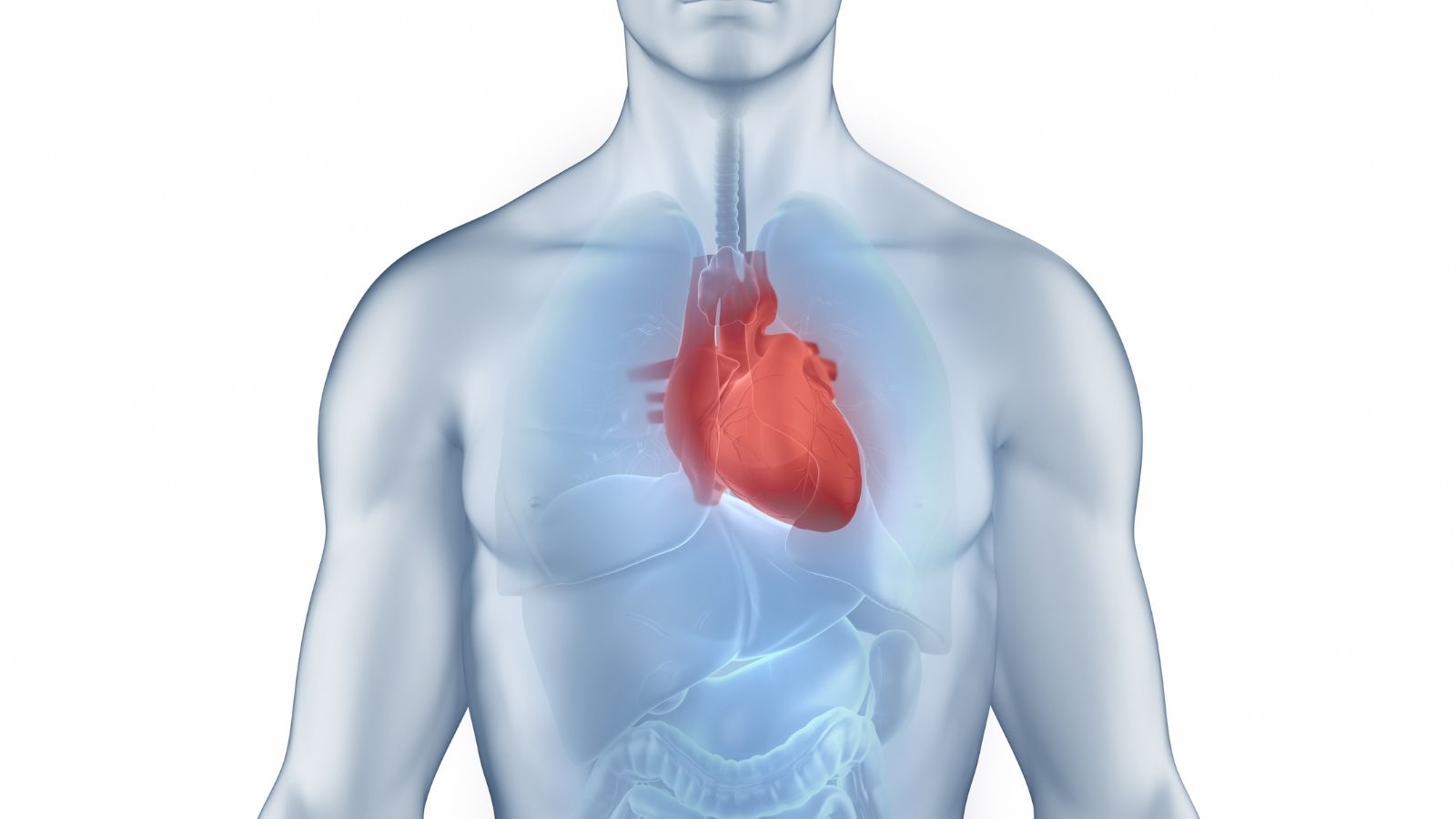
In simple terms, Nutcracker Syndrome is when the main vein that carries blood from your left kidney to the heart (the left renal vein) is squeezed between two large arteries. One of these arteries is the aorta, the body’s main artery, and the other is the superior mesenteric artery (SMA), which carries blood to the intestines. Normally, there is a wide enough angle between these two arteries for a vein to pass through easily. However, in some people this angle is narrower at birth or becomes narrower later.
When this narrowing occurs, the left renal vein feels like it is stuck in a vice. Because blood cannot return to the heart freely, it pools in the pinched vein, where the pressure builds up to dangerous levels. Think of it like a river overflowing its bed because there is an obstacle in the way. The high pressure causes the blood to back up against the normal direction of flow, towards the kidney and the smaller and more vulnerable vessels connected to it. This backflow and blood pooling starts a chain of nutcracker syndrome symptoms that appear in different parts of the body and severely reduce quality of life.
What is the difference between the Nutcracker Phenomenon and Syndrome?
It is very important to distinguish between these two terms, because not every vascular compression requires treatment.
The Nutcracker Phenomenon: This refers to a purely anatomical condition. This means that you have a compression of your left renal vein, but this does not cause any symptoms or symptoms. It is usually detected by chance on imaging such as an ultrasound or CT scan for another reason. Many people with the phenomenon have no problems throughout their lives and do not need treatment.
Nutcracker Syndrome: This is when anatomical compression becomes a clinical problem. The blood pooling and high pressure caused by the compression leads to significant complaints (pain, bleeding, etc.) and affects the patient’s quality of life. The decision to treat is taken only in the presence of a “syndrome”, i.e. when symptoms begin.
What are the Anatomical Causes and Risk Factors of Nutcracker Syndrome?
This syndrome is usually based on an innate anatomical predisposition. However, certain conditions and lifestyle factors can trigger the onset of this syndrome or worsen the condition. Knowing these risk factors can help you understand the situation.
Some of the main known risk factors for the syndrome are:
- Rapid and severe weight loss
- Naturally very thin and tall body structure (asthenic build)
- Low protective fat tissue between the vessels
- Rapid height growth during puberty
- Pregnancy (pressure of the growing uterus on the vessels)
- Kidney prolapse (nephroptosis)
- Intra-abdominal mass or abdominal aortic aneurysm (rare)
What are the Most Common Nutcracker Syndrome Symptoms?
The symptoms of Nutcracker syndrome can vary from person to person, depending on the severity of the compression and which vessels the blood escapes back into. However, some symptoms are quite typical and give important clues to suspect this syndrome.
The most common complaints experienced by patients are as follows:
- Dull, aching and persistent pain in the left flank (flank) or left side of the abdomen
- Pain that increases especially with standing or exercise
- Visible blood in the urine (pink, red or cola-colored urine)
- Occult urine bleeding (microscopic hematuria) that is only revealed in tests
- Anemia (anemia) that may develop due to these bleeding
- Chronic fatigue and low energy
- Protein leakage in the urine (especially the type that increases when standing)
Which Specific Nutcracker Syndrome Symptoms Occur in Men and Women?
Nutcracker syndrome can also cause different symptoms in men and women due to our anatomical structure. This is because both the left ovarian vein and the left testicular vein drain blood directly into the compressed left renal vein. The high pressure here is reflected in these veins and causes blood to escape backwards into the genital organs.
The symptoms, especially in women, are called Pelvic Congestion Syndrome (PCS):
- Chronic groin pain (especially worse when standing)
- Feeling of fullness and pressure in the groin area
- Painful sexual intercourse (dyspareunia)
- Severe menstrual cramps (dysmenorrhea)
- Varicose veins in the external genital area (vulva) or buttocks
In men, this condition usually manifests as left-sided varicocele:
- Swelling and enlarged veins in the left testicle (varicocele)
- Pain and heaviness in the scrotum
- Impaired testicular function and risk of infertility in advanced cases
Why is Nutcracker Syndrome so Difficult to Diagnose?
This is a common question asked by patients. The main reason why it is difficult to diagnose is that the symptoms are very general and can easily be confused with dozens of different and more common diseases such as kidney stones, urinary tract infections, gynecological diseases or intestinal problems. For this reason, patients who do not reach the correct diagnosis may experience an exhausting “diagnostic adventure” by moving between different departments for years.
The diagnosis of nutcracker syndrome is usually a diagnosis of “exclusion”. This means that the physician first rules out all other common diseases that may cause the symptoms with detailed tests, and then suspects this rare condition if the symptoms persist. Therefore, the evaluation of an experienced cardiovascular surgeon who keeps this syndrome in mind and has a high index of suspicion plays a key role in the diagnostic process.
Which Imaging Methods are Used in the Diagnosis of Nutcracker Syndrome?
In suspected cases, various imaging modalities are used to confirm the diagnosis and clarify the location and extent of the impingement.
The main tests used in the diagnostic process are:
Doppler Ultrasound: It is the first step test. It shows the speed and direction of blood flow in the vessels with sound waves. Abnormally accelerated blood flow at the impingement point is an important clue to the syndrome.
Computed Tomography (CT) Angiography: Provides detailed three-dimensional images of the vessels. It clearly shows the narrowed angle between the aorta and SMA causing the compression, the difference in vessel diameters and the typical appearance of narrowing, the so-called “beak sign”.
Magnetic Resonance (MR) Angiography: CT provides detailed anatomical information similar to angiography and has the advantage of being radiation-free.
What is the Gold Standard Method for the Diagnosis of Nutcracker Syndrome?
Although imaging modalities can create strong suspicions about the syndrome, the “gold standard” method that confirms the diagnosis is venography, which is an interventional procedure and pressure measurement. This procedure is performed in the angiography laboratory by a specialized cardiovascular surgeon.
During the procedure, a thin catheter is inserted through a vein, usually in the groin, into the left kidney vein where the compression is located. A contrast medium (dye) is then administered and X-rays of the vein are taken. It clearly maps the location and extent of this compression and which alternative routes (collateral vessels) the blood is escaping to.
But the most critical step is the pressure measurement. The same catheter is used to measure the pressure difference between the compressed left renal vein (left renal vein) and the main vein (inferior vena cava) where the blood drains. Normally this difference is close to zero. If a significant pressure difference is detected between these two points, this is conclusive evidence that the compression is blocking blood flow and confirms the diagnosis of nutcracker syndrome.
What Methods and Drugs are Used in Non-Surgical Treatment?
Not all cases of nutcracker syndrome require immediate surgery. Conservative (non-surgical) treatment is usually the first choice, especially in adults with mild complaints and in adolescents and children under the age of 18. As the body develops in adolescents, there is a high probability that the angle between the veins will improve and the symptoms will disappear on their own.
The aim of the methods and medicines used in this process is to manage the symptoms and give the body time to heal:
- Regular follow-up and observation
- Controlled weight gain (especially to increase adipose tissue in thin patients)
- Low-dose aspirin (to reduce the risk of clots and improve blood flow)
- Blood pressure medications such as ACE inhibitors (to reduce protein leakage in the urine)
- Painkillers
- Compression stockings (to relieve pain, especially in patients with pelvic congestion)
When Is Surgical Treatment Necessary in Nutcracker Syndrome?
Interventional treatment options are considered in patients who do not respond to conservative treatment or whose symptoms are very severe from the beginning.
The criteria for deciding on surgery are usually the following:
- Severe and persistent pain that interferes with daily life and does not respond to medication
- Recurrent urinary bleeding leading to anemia or the need for blood transfusions
- Onset of deterioration in kidney function
- Persistence or increase in complaints despite conservative treatment for at least 6 months in adults and 24 months in young people
What Is Endovascular Stenting Treatment and What Are Its Risks?
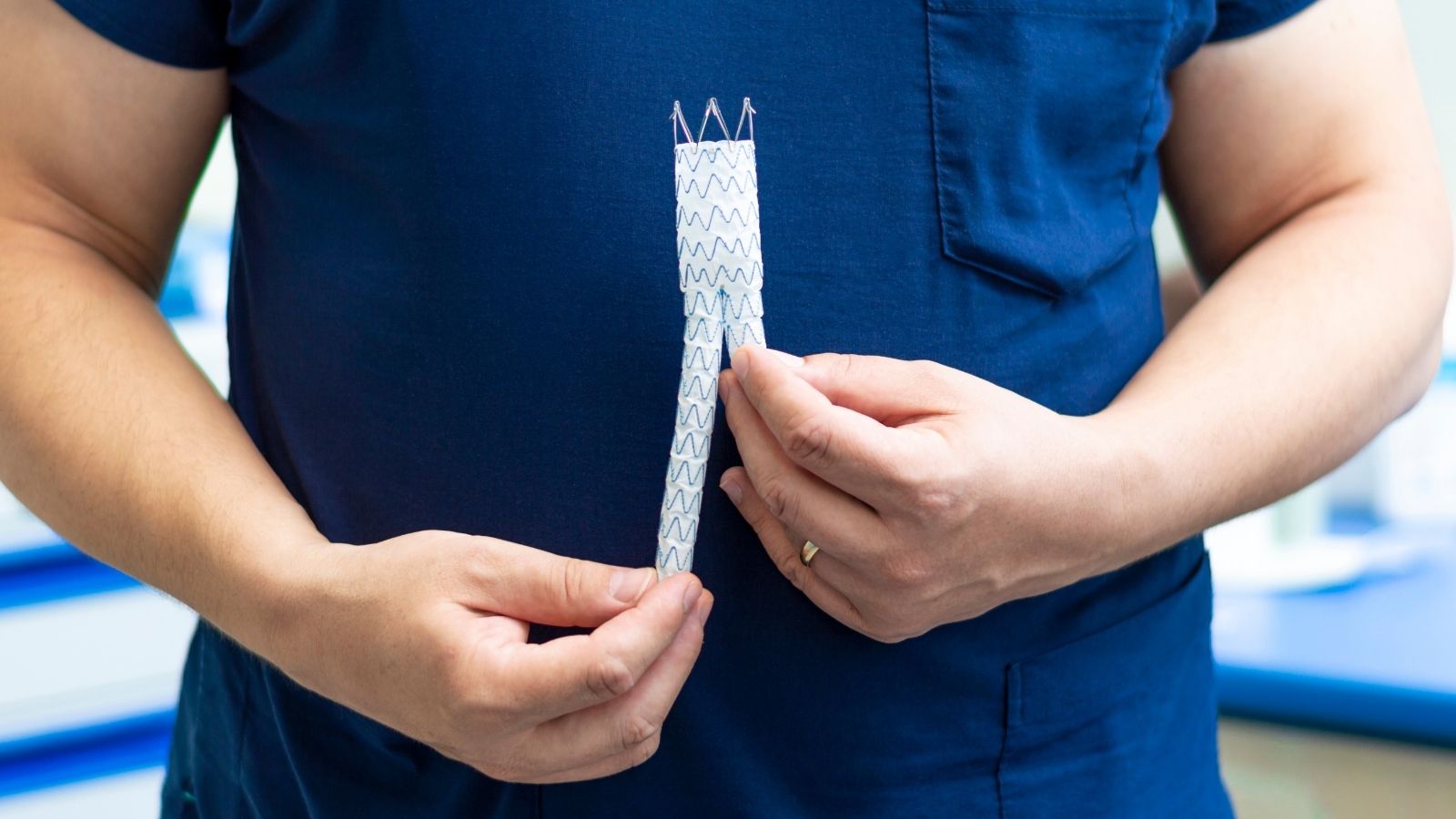
Stenting is a minimally invasive method that expands the inside of the compressed vessel with a metal cage (stent) to keep it open. It is done through a small incision in the groin and the healing process is faster. However, there is a significant risk, especially in young and active patients: Migration of the stent. The stent can move within the vessel and travel to the heart or lung, which can lead to a life-threatening emergency. Therefore, the decision to stent should be based on a careful risk-benefit analysis for each patient.
What is Left Renal Vein Transposition, the Gold Standard Surgery?
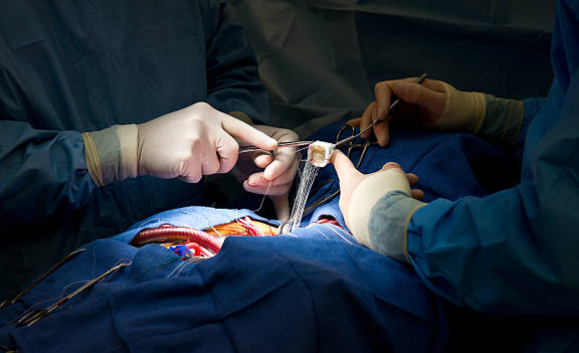
The most reliable, permanent and considered the “gold standard” surgical method for the treatment of nutcracker syndrome is left renal vein transposition. This surgery solves the problem at its source. During the operation, the compressed vein is surgically freed from the compressed area, cut and sewn back to the main vein (inferior vena cava) at a lower point where there is no compression. In this way, the path of the vein is completely changed and the “nutcracker” effect is permanently removed. This surgery can now also be performed with closed methods such as robotic surgery, allowing the patient to have a more comfortable and faster recovery. Long-term results are excellent and it is the most preferred method, especially for young, active patients.
Is Nutcracker Syndrome Dangerous and What Happens If Untreated?
Yes, the answer to the question whether untreated nutcracker syndrome is dangerous is clear: it can lead to serious problems in the long term. Here are the possible risks if Nutcracker syndrome is left untreated:
- Permanent damage to kidney function
- Clot formation in the compressed vessel (renal vein thrombosis) and the risk of this clot being thrown into the lung
- Chronic pain syndromes that become unbearable
- Significant decrease in quality of life, disengagement from work and social life
- Infertility problems in men and women
What is a Real Nutcracker Syndrome Patient Reviews and Experience Like?
Patients’ experiences best summarize how this syndrome affects life. A typical story usually goes like this: “A 28-year-old woman presents with complaints of left flank pain, chronic fatigue and painful intercourse for about three years. During this period, she has been to many departments such as urology, gynecology and physical therapy, and has undergone countless films and tests, but to no avail. His complaints were even interpreted as ‘psychological’. Finally, he was referred to a cardiovascular surgeon experienced in venous compression syndromes. Detailed examinations (CT angiography and venography) confirmed the diagnosis of Nutcracker Syndrome and related Pelvic Congestion Syndrome. The patient underwent left renal vein transposition surgery with robotic surgery. Just a few weeks after the operation, the patient states that the pain that has been making her life a nightmare for years is gone, her energy is restored and she can return to her normal life.”

Prof. Dr. Yavuz Beşoğul graduated from Erciyes University Faculty of Medicine in 1989 and completed his specialization in Cardiovascular Surgery in 1996. Between 1997 and 2012, he served at Eskişehir Osmangazi University Faculty of Medicine as Assistant Professor, Associate Professor, and Professor, respectively. Prof. Dr. Beşoğul, one of the pioneers of minimally invasive cardiovascular surgery in Türkiye, has specialized in closed-heart surgeries, underarm heart valve surgery, beating-heart bypass, and peripheral vascular surgery. He worked at Florence Nightingale Kızıltoprak Hospital between 2012–2014, Medicana Çamlıca Hospital between 2014–2017, and İstinye University (Medical Park) Hospital between 2017–2023. With over 100 publications and one book chapter, Prof. Dr. Beşoğul has contributed significantly to the medical literature and is known for his minimally invasive approaches that prioritize patient safety and rapid recovery.